

Programmes & Capabilities
We develop immersive and interactive programmes in close collaboration with our clients and partners, designed to support learning, reflection and decision-making in complex environments.

Narrative and interactive learning on humanitarian and ethical dilemmas
We design interactive, narrative-driven programmes that place participants inside realistic situations, where decisions have consequences and responsibility cannot be abstracted.
These programmes are used to explore humanitarian dilemmas, civilian protection, ethical trade-offs and the human impact of decisions through storytelling and choice, rather than through abstract instruction.
In this context, we have work closely with creative studios and production teams, including the Danish company Laban, acting as legal designer and co-writer to integrate law, ethics and responsibility directly into the narrative structure — from early script development through filming and final interactive logic.
This approach allows legal and ethical considerations to be experienced rather than explained, and supports both facilitated discussion and individual reflection.

Scenario-based operational training for weapon bearers and security actors
We design immersive, scenario-based programmes focused on operational decision-making and conduct in high-risk environments.
These programmes are built around realistic operational dilemmas rather than theoretical models, and typically involve:
- choose-your-path decision structures
- time pressure and incomplete information
- application of IHL / LOAC and rules of engagement
- structured debriefing and After-Action Reviews
The objective is not to test knowledge, but to create credible situations where judgment, restraint and responsibility must be exercised under pressure.
In developing such programmes, close collaboration with practitioners experienced in immersive and operational training is essential.

Virtual Reality training for complex or high-risk environments
Virtual Reality is used where it provides clear pedagogical and operational value — particularly in environments that are difficult, dangerous or costly to simulate through conventional training methods.
We design VR modules as part of broader learning pathways, not as standalone “experiences”, and integrate them with facilitated sessions, individual learning or blended training approaches.
This includes VR training developed within a United Nations context, such as work carried out for the United Nations Office on Drugs and Crime in Bangkok, optimised for standalone deployment on devices such as Meta Quest, allowing ease of use without complex technical infrastructure.
The focus remains on conduct, situational awareness and decision-making, rather than on technology for its own sake.

Owned demonstrators and proof-of-concept programmes
Alongside client-led programmes, we develop owned demonstrators that allow us to explore new formats, methods and technologies without institutional or operational constraints.
These proof-of-concept programmes are used to test pedagogical approaches, immersive mechanics and deployment models, and to demonstrate what can be adapted, localised or scaled for other contexts.
One such demonstrator is the OZM-72 mine awareness VR module. Developed as a standalone immersive scenario, it focuses on mine awareness, risk recognition and safe behaviour in contaminated environments, using the OZM-72 as a concrete case study.
The module illustrates how VR can support situational awareness and behavioural change, particularly where conventional training reaches its limits.
This demonstrator also serves as a reference for future immersive training on explosive hazards, civilian protection and post-conflict risk reduction.
Profile
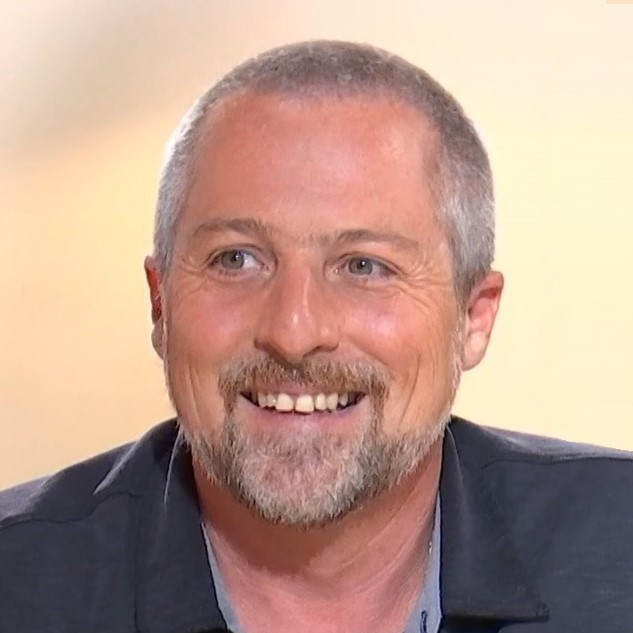
Phoenix VfX is led by Vincent Sautenet, a lawyer by training, with a diploma in pedagogical engineering and a professional focus on the design of immersive and interactive training for complex, high-risk environments.
Over the years, we have worked with the United Nations system, the International Committee of the Red Cross, armed forces and armed groups, as well as international NGOs, on training programmes where law, ethics and operational reality intersect.
Our work spans humanitarian, military, diplomatic and educational contexts, and focuses on making responsibility, judgment and conduct tangible through experience rather than abstraction.
Background and experience
We have designed and led legal and ethical training programmes in close connection with field operations, as well as for senior officials, diplomats and decision-makers.
Our work has involved engaging with a wide range of audiences, including humanitarian staff, military personnel, armed groups, diplomats and policy professionals, often in contexts where legal and ethical questions cannot be separated from operational constraints.
Throughout our work, a constant focus has been the need to move beyond purely normative instruction and to support learning through realistic scenarios, discussion and reflection grounded in real-world practice.
Pioneering immersive training at the ICRC
At the International Committee of the Red Cross, Vincent led, together with Christian Rouffaer, the initiation and development of some of the organisation’s first CGI-based and immersive training tools on international humanitarian law.
This included early digital and e-learning references, as well as scenario-driven courses developed for armed groups, and marked a shift toward experiential approaches to legal and ethical training within the organisation.
That experience continues to inform how we design immersive programmes today — grounded in law, shaped by reality, and focused on responsibility.
Bridging humanitarian, military and diplomatic worlds
A recurring aspect of our work has been operating at the intersection of humanitarian principles, military practice and diplomatic engagement.
This has included training and dialogue with military audiences on IHL / LOAC, engagement with armed groups, exchanges with diplomatic and policy communities, and participation in military training forums within NATO, notably through the NATO Training Technology Conference (NTTC).
This positioning allows us to design training that is legally sound, operationally credible and institutionally usable across different professional cultures.
How this informs today’s work
Today, this background underpins an approach that combines legal and ethical rigour, pedagogical engineering, operational realism and immersive design.
It also explains the emphasis placed on collaboration, discretion and institutional alignment throughout the programmes presented on this site, and the focus on immersive training as a means to support judgment, responsibility and informed decision-making in complex environments.